by Arianna Iliff, LMFT | 8 minute read

Let’s piece the facts together.
Eye Movement Desensitization and Reprocessing (EMDR) is becoming better known among potential clients, in part due to its presence on social media. Some practitioners choose to use tools to facilitate the bilateral stimulation element of EMDR, like vibrating 'tappers,' bilateral audio, or devices that show alternating lights. Social media loves a good visual aid, and as a result EMDR can appear a bit trendy, or even flashy (pun absolutely intended). But as a result of increased visibility, misconceptions can come up, and some of these myths can get in the way of people getting the care they need! I want potential clients to know that EMDR is not magic. Rather, it's an evidence-based treatment modality that's one of the top choices to decrease symptoms of PTSD (Beauvais et al., n.d.).
Today, I'm going to break down my top 8 myths about EMDR and offer you some solid fact-checking. Let's get into it!
Myth 1: EMDR is only for "real trauma."
If you've met somebody who has ever attended EMDR therapy, you may find they were someone who had a very specific traumatic event happen--a car accident, a traumatic death, or perhaps in the course of high-demand work environments, like the military. It's true that EMDR was first tested on combat veterans, back when it was called EMD and focused just on the desensitizing portion.
But there's something interesting I've come to realize in the course of working with people with traumatic experiences: no matter what the event or events, folks tend to believe that someone else had it worse. It's as though invalidating one's experience is a part of the trauma itself, perhaps a survival tool. It's something I'm aware of with my neurodivergent clients in particular. When folks experience intense emotions, these feelings may have been written off as melodrama or overreaction by important people in our lives. This might not be what commonly gets called trauma, but it's real. And it deserves attention.
The fact of the matter is this: if you've had an experience that causes you distress and interferes with your daily life, EMDR could bring you relief. In EMDR, we work with your nervous system, not your friends', not your neighbors'. In EMDR we say that all nervous systems want to trend toward healing, and many challenging experiences could be roadblocks. And that's okay.
Myth 2: EMDR is hypnosis.

There are no stopwatches in EMDR! We have special tools for BLS.
Imagine walking into a doctor's mahogany-clad office, sitting on his plush couch, and watching his pocket watch move back and forth as you're told how very sleepy you're becoming: yeah, I definitely understand this myth. Bilateral stimulation, that is, the back-and-forth eye movements that make EMDR so distinct, is kind of reminiscent of our cultural understanding of hypnosis.
But just as clinical hypnosis is not quite what I've just described, EMDR is different too. Clinical hypnosis attempts to induce a trance state in the client, but in EMDR, we remain conscious while reprocessing. We use a term called dual awareness to describe what we experience during reprocessing. It means that we're present in the current moment (sitting in our therapist's office or on Zoom) but also remembering and experiencing what happened in the past. Dual awareness is part of how we modulate our reprocessing. This way, thinking about challenging events is not re-traumatizing. Learn more about some of the language we use in EMDR, including dual awareness.
Myth 3: EMDR is hippy-dippy woo-woo stuff.
"Go with that. Notice that. Just allow and let it happen."
If you're skeptical of this type of language, I'm sure you're already groaning, and it's all language I use in EMDR sessions all the time. There are years upon years of psychological science establishing behavioral and cognitive therapies, clarifying how human brains work. Brains love certainty, and uncertainty tends to breed anxiety. But the US Veterans Administration strongly recommends EMDR for the treatment of PTSD, and the International Society for Traumatic Stress studies (ISTSS) endorses EMDR throughout its Methodology and Recommendations documentation (U.S. Department of Veterans Affairs & Department of Defense, 2023; International Society for Traumatic Stress Studies, 2019).The EMDR International Association (EMDRIA) also offers an EMDR Library, where you can read more about what the latest research is saying about EMDR (EMDRIA, n.d.).
All that to say, EMDR isn't just something some kooky clinicians made up--it's evidence-based.
As a clinician who works with neurodivergent folks, one thing I discuss during phase two of EMDR is what this language means, as it is not especially concrete. I might modify the language if needed too. Learn more about what working with a neurodiversity-affirming therapist could mean for you.
Myth 4: EMDR is going to "fix me."
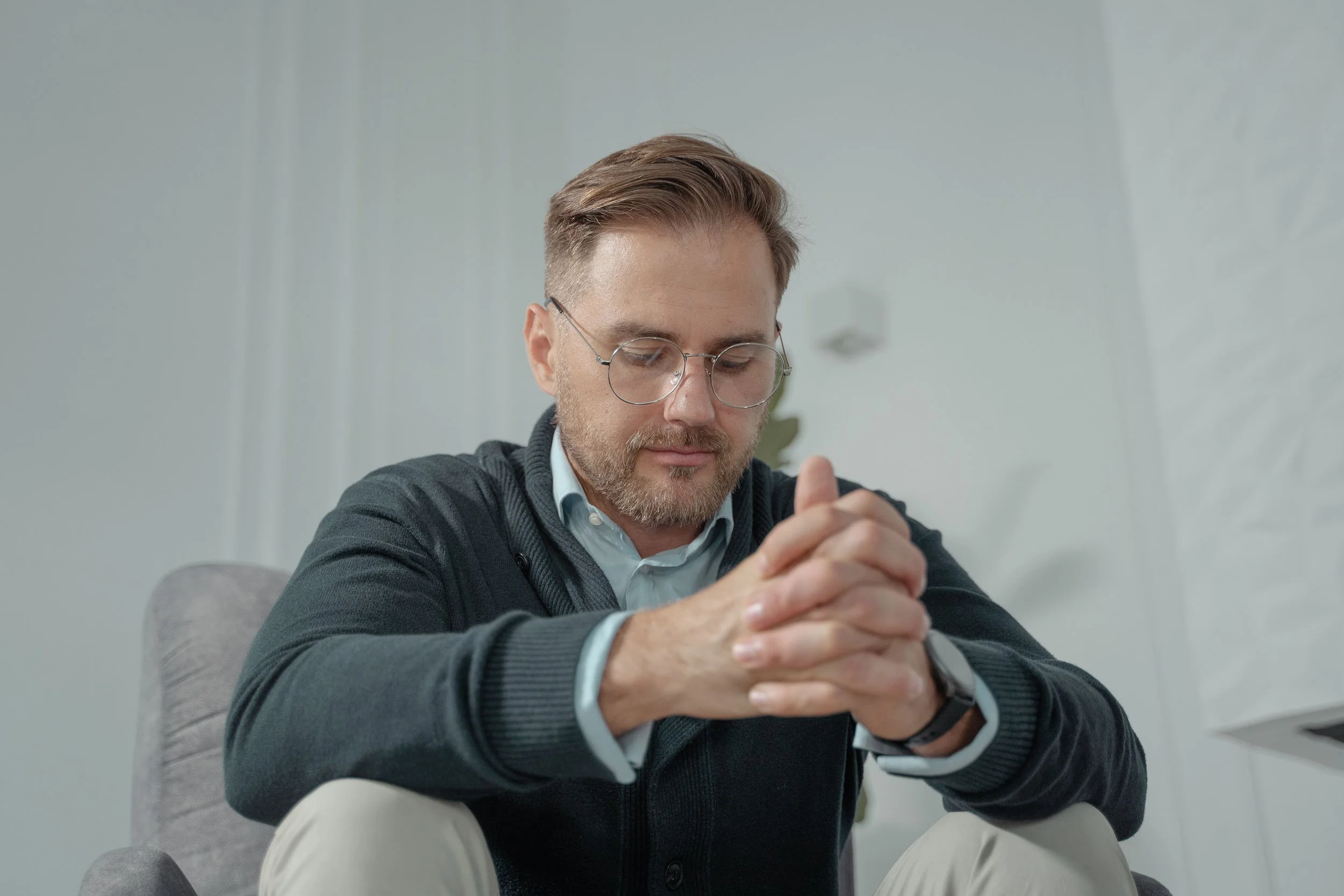
You’ve been carrying a lot for some time. But that doesn’t mean you’re broken.
Even though EMDR has been around since 1987, the current hype around EMDR on social media makes it seem like the new and exciting modality on the block. It can seem like "This is the thing! Finally I'll get some relief! And if it doesn't work, that's proof I'm unfixable!" And to be sure, maybe it will help! Of course I'm pretty excited about it myself, because I've seen some really awesome results from EMDR. But I think this myth comes in because people feel broken, and the fact is, you're not broken.
When we experience significant stress or trauma our nervous system responds in kind. Congratulations, your nervous system is working! But maybe it's working a little too hard right now, in the wrong situations. For my ADHD clients, small mistakes may feel like the end of the world, more proof that we're unmistakably flawed in our character. Our nervous systems might always be looking ahead to the next mistake, the next disappointment.
The fact is, there are lots of evidence-based modalities, even ones aimed toward trauma. EMDR is just one of them. It's an excellent one! But it is still just one. And you don't need fixing.
Myth 5: EMDR is going to recover repressed memories.
Many folks who don't remember full details of traumatic events, or even large portions of the past, may balk at trauma therapy. Maybe they believe they need the full explicit memory to fully release it, or maybe they doubt their own perceptions. Sometimes I'll hear something like, "I believe [event] happened growing up, but I just can't remember." It can be a terribly scary feeling to feel we can't trust our own brains, our own memories. And what if we get new information that makes things feel worse? What's more, controversies around "repressed memory therapy" in the 1980s, where clients' memories of ritual abuse were discovered to be coerced by providers and unreliable, can lead to some uncertainty around doing this type of work.
I want to be very clear when I say a well-trained provider of trauma therapy will let your nervous system lead, rather than making suggestions about what happened. Our nervous system can still heal even when we don't exactly know what it wants to heal from. We don't need to remember all the explicit details of a traumatic event to reprocess it.
But what happens if we remember something during reprocessing? As an EMDR client, this in fact happened to me, but the additional information I was able to access was positive. This is a helpful part of EMDR. But it's important to note that when it comes to difficult parts of memories, resurfacing this content is not only not the goal, but according to the APA, very rare occurrences (n.d.). But in the controlled environment of EMDR, reprocessing is contained. A bit of uncertainty before attending any type of trauma therapy is normal. But with the right provider, EMDR is still safe and effective--even if you do remember more details as you go.
Myth 6: EMDR will mess up my life.

Your safe container might look like a locked trunk or a storage bin.
I like to imagine that our difficult memories live in a cardboard box in our minds. When traumatic events sit in the box for some time, it's as though water is seeping out of the box. EMDR works to slowly and safely open the box and pour the liquid into a safe container.
The grain of truth in this myth is that EMDR can definitely be intense, and reprocessing continues between sessions too, so participants may find some increased fatigue or emotional dysregulation happens when a memory is not fully processed yet. This is the importance of phase 2 resourcing: it's where clients will discover how to safely contain the content, so that exploring it doesn't "mess up their lives."
Timing can also play a role in successful reprocessing. Your therapist will also help you figure out if now is the right time. For example, I wouldn't start active reprocessing with someone who is about to start a new job or move an hour away. Instead, I would delay reprocessing until things feel more settled for that person.
This is why it's important to find an experienced therapist who can assess your needs thoroughly and pace reprocessing according to your needs.
Myth 7: I can't visualize, so I can't do EMDR.
Because the protocol for EMDR asks clients to bring up visual images of difficult content, this could be discouraging for folks who experience aphantasia, and one would think that you can’t participate in EMDR with aphantasia, as it is the difficulty with or inability to mentally visualize. To assess this, I will ask folks, "When I ask you to imagine a red ball, what do you see in your mind?" If the answer is "a red ball," great! If the answer is "the words 'a red ball,'" or not much at all, then this may be something you experience too. But not to worry: we can do EMDR without visualization. Instead, we can still do the protocol visualizing words or even just identifying descriptions of events. In my office, I never force the protocol where it just doesn't fit for a client's neurotype, so long as the outcome is the same.
Myth 8: EMDR has to be done in person.
On the contrary! While there are advantages to doing EMDR in person, EMDR can be just as successful on telehealth too. I like to use a platform called bilateralstimulation.io to facilitate the eye movements because it's super flexible. Using this tool, BLS may include visuals or audio, and different colors or speeds.
Myths? Busted.
These eight myths can make EMDR seem mysterious, but EMDR is not magic, but science. With a trained provider (yes, like me!), you'll work together to set goals, contain, and pace EMDR in a way that fits your unique brain. If you'd like to learn more about how that works, I invite you to have a free consultation with me and learn more about this exciting treatment.
Arianna Iliff, LMFT (they/she) is a licensed therapist and the founder of Inspiration Point Therapy, serving the Merrimack Valley, coastal Essex county, and all of Massachusetts via telehealth. On their blog, The Reroll, they share helpful information about ADHD, DBT, EMDR, and the wide world of mental health.
References
American Psychological Association. (n.d.). Questions and answers about memories of childhood abuse. https://www.apa.org/topics/trauma/memories
Beauvais, D., McCarthy, E., Norman, S., & Hamblen, J. L. (n.d.). Eye movement desensitization and reprocessing (EMDR) for PTSD. U.S. Department of Veterans Affairs, National Center for PTSD. https://www.ptsd.va.gov/professional/treat/txessentials/emdr_pro.asp
EMDR International Association. (n.d.). EMDR library. https://www.emdria.org/library
International Society for Traumatic Stress Studies. (2019). Posttraumatic stress disorder prevention and treatment guidelines: Methodology and recommendations. https://istss.org/clinical-resources/trauma-treatment/istss-prevention-and-treatment-guidelines
U.S. Department of Veterans Affairs & Department of Defense. (2023). VA/DoD Clinical Practice Guideline for the Management of Posttraumatic Stress Disorder and Acute Stress Disorder. https://www.healthquality.va.gov/guidelines/mh/ptsd/